Maureen
Thurston-Chartraw
Murrindindi Shire Council
UX/UI Design Project - 2025
OVERVIEW:
SABi, is a university capstone project - created for older adults in my groups pursuit to find a solution and to encourage ageing in place for older adults with technology in their own home. We specifically focused on the bathroom area of the home as there is a growing population of older people in Australia who wish to “Age in Place” in their own homes.
Project Brief:
At the start of the project we were handed this as our problem statement;
“There is a ‘wicked’ problem at the hands of Australia, with an ageing population occurring fast. By 2066, 1 in 5 Australians will be over the age of 85 (AIHW, 2024).”
The purpose of the project was to investigate the current needs and aspirations of older adults regarding safe and successful in-home assistance. The goal is to design a assistive technology (AT) that both work with the users they are supposed to assist as well as providing the required functionality in the home.
The challenge involved designing a retrofit a integrated assistive UX system into the home of an older adult/couple that is
User-friendly and intuitive
Pleasant and satisfying to use
Tailored to individual needs
My group (The Design Diva’s), decided it would be best before conducting any initial researching or designing/prototyping we would focus on the idea of when designing;
To think and design more of an experience than a product.
Primary Research:
Semi Structured Interview - Bathroom layout & current technology usage (anti-slip mats / flooring, taps, rails) pain points experienced using the bathroom. I wrote up and analysed the semi-structured interview results.
Probing Diary - Bathroom accessibility and usage (how many times used per day)
Observations - Of users home bathrooms as they showed us the room and observed as they navigated around the bathroom.
Online Survey - Demographic, living arrangements, technology usage.
KEY FINDINGS:
Safety and Stability: Participants emphasised the importance of grab rails, shower chairs, and non-slip surfaces to reduce falls and maintain confidence during use.
Accessibility and Effort Reduction: Physical fatigue and cleaning difficulty highlighted the need for ergonomic layouts and low-maintenance materials that reduce strain.
Lighting and Spatial Design: Adequate lighting and clear spatial layouts directly affected participants’ sense of safety, visibility, and ease of navigation.
Emotional Wellbeing and Dignity: Users preferred non-clinical, homely environments that preserve autonomy, privacy, and comfort rather than medical-looking spaces.
Technology and Simplicity: Attitudes toward technology varied — many favoured intuitive, tactile, and unobtrusive assistive features over complex or high-tech systems.
Drawings / Layouts designed and created by me
Secondary Research:
Adaptation and Resilience: Older adults experience gradual psychological and cognitive changes, adapting through environmental modifications, emotional resilience, and external support (Ge et al., 2022). Through Literature Review analysis we found;
Stages of Psychological Decline
Physical and Cognitive Deterioration
Ageing in Place benefits - supports better quality of life, social connection, and reduced healthcare costs
Older adults face technology anxiety due to unfamiliarity and sensory limitations; solutions include simplified, age-friendly interfaces.
Accessibility and Inclusivity :
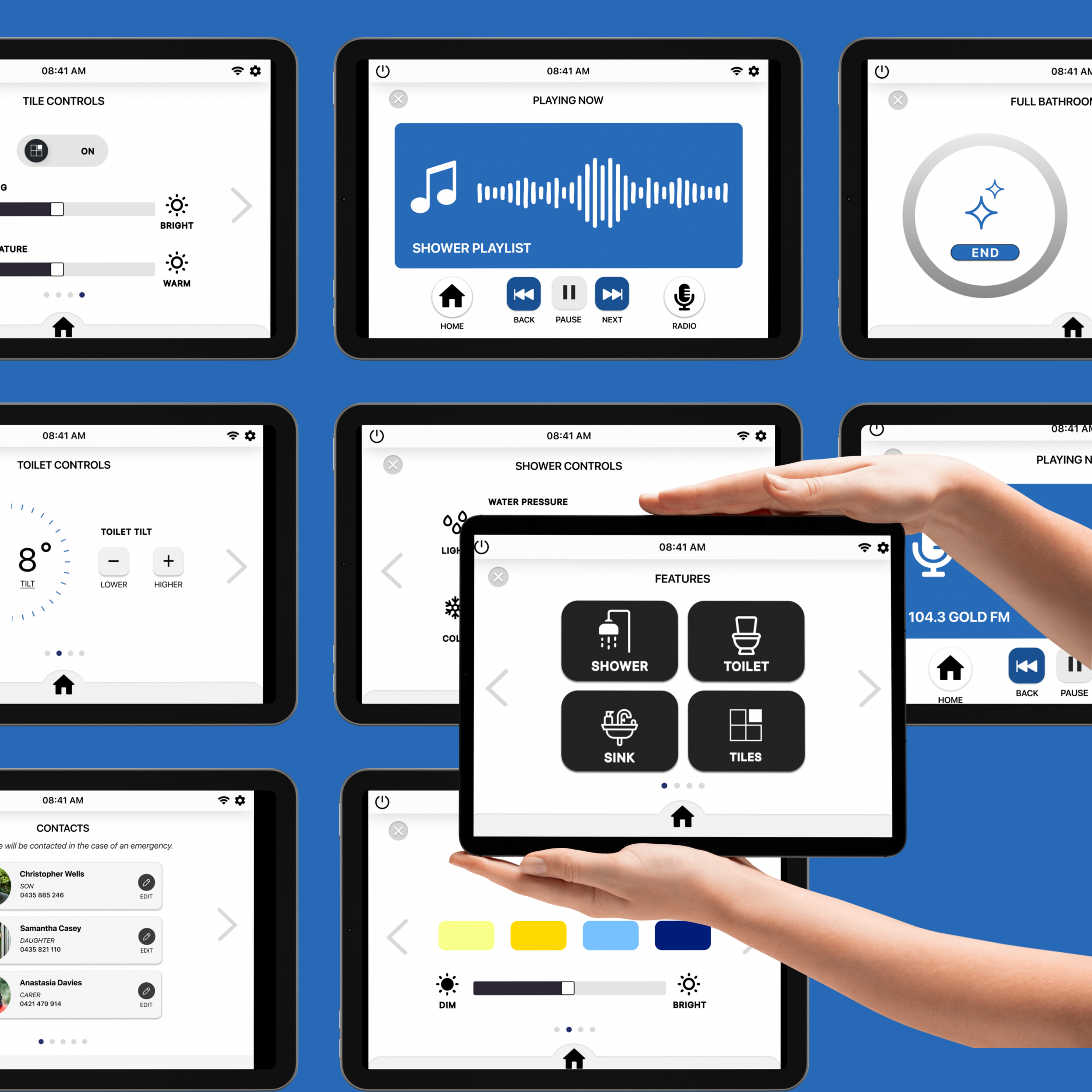
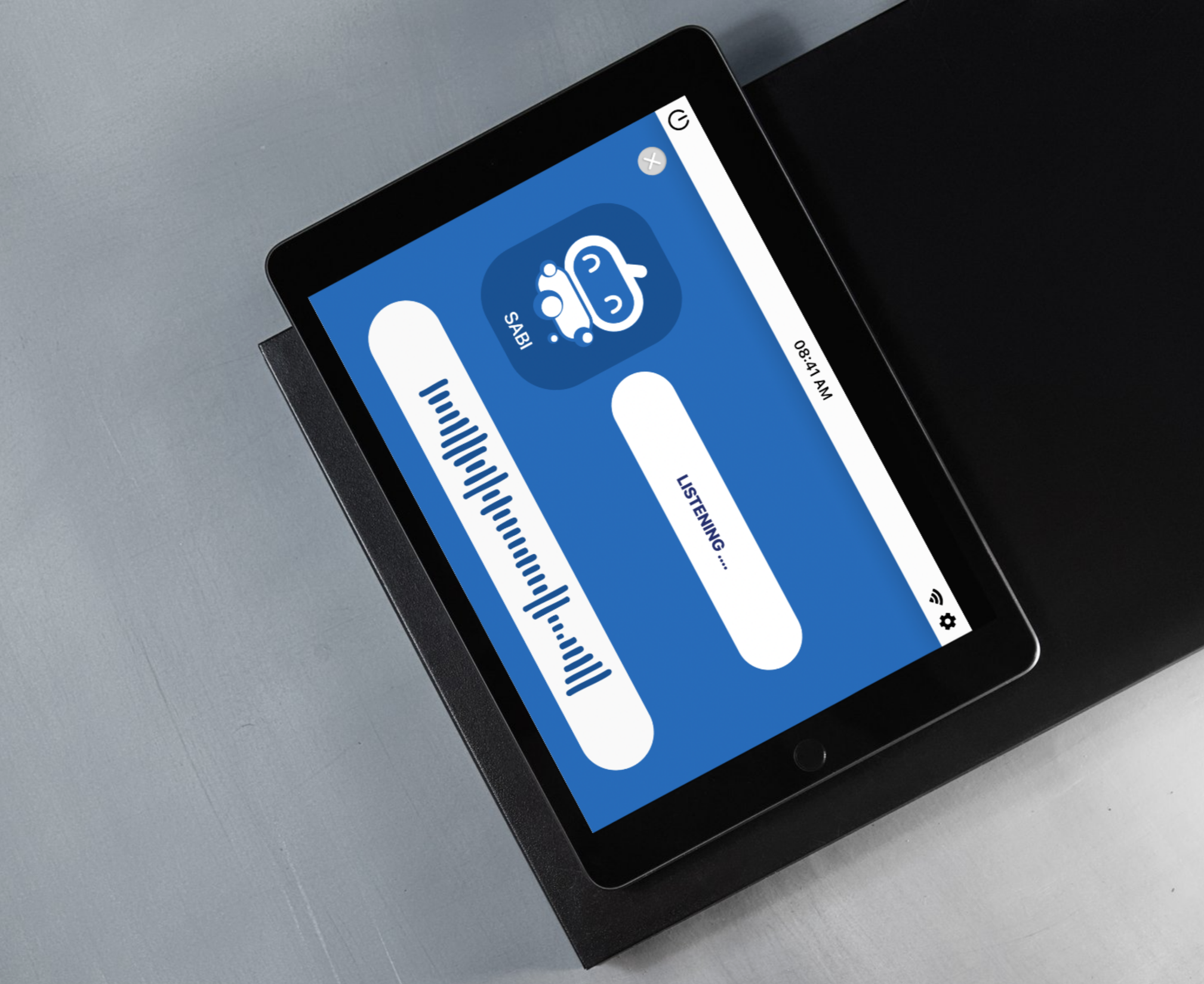
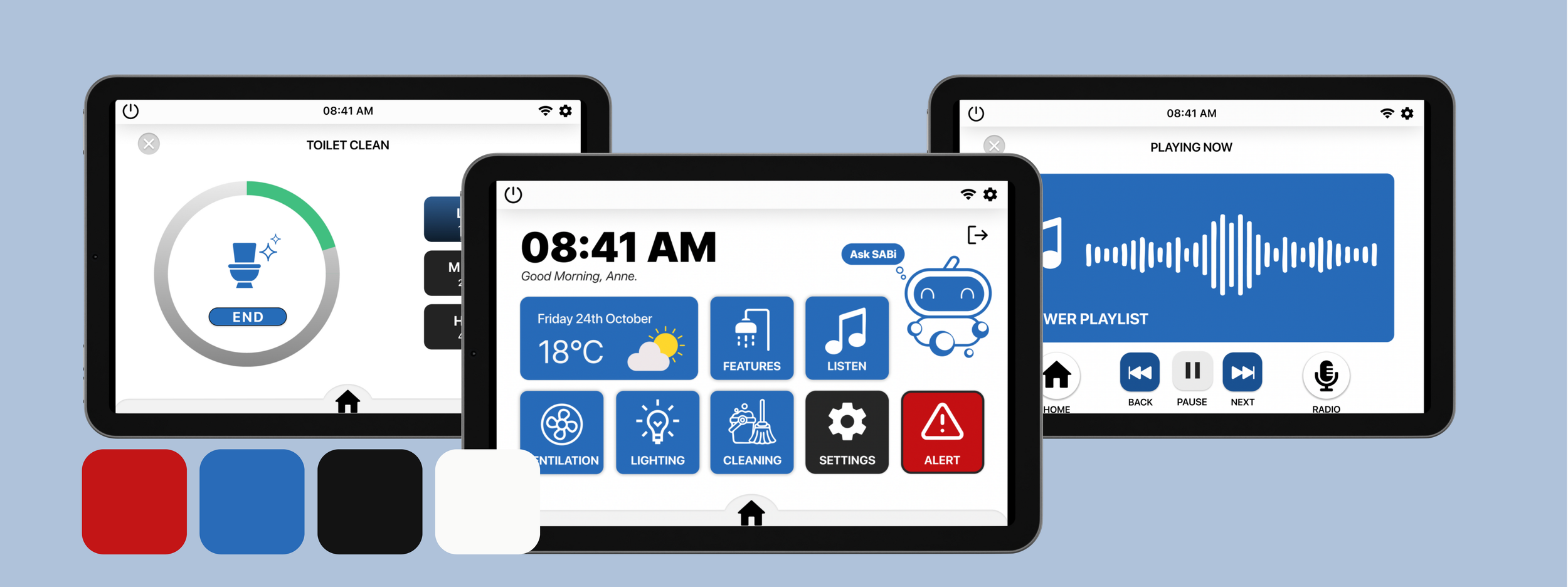
Inclusive Accessibility: SABi supports users with reduced eyesight and hearing through voice control, clear audio cues, large tactile buttons, and simple, high-contrast visual layouts.
User Independence and Dignity: Designed to empower older adults, SABi offers discreet assistance for those living alone while maintaining their privacy, autonomy, and sense of normalcy.
Personalisation and Adaptability: Users (or carers) can customise settings such as ventilation, cleaning cycles, music, and interface preferences to suit evolving individual needs.
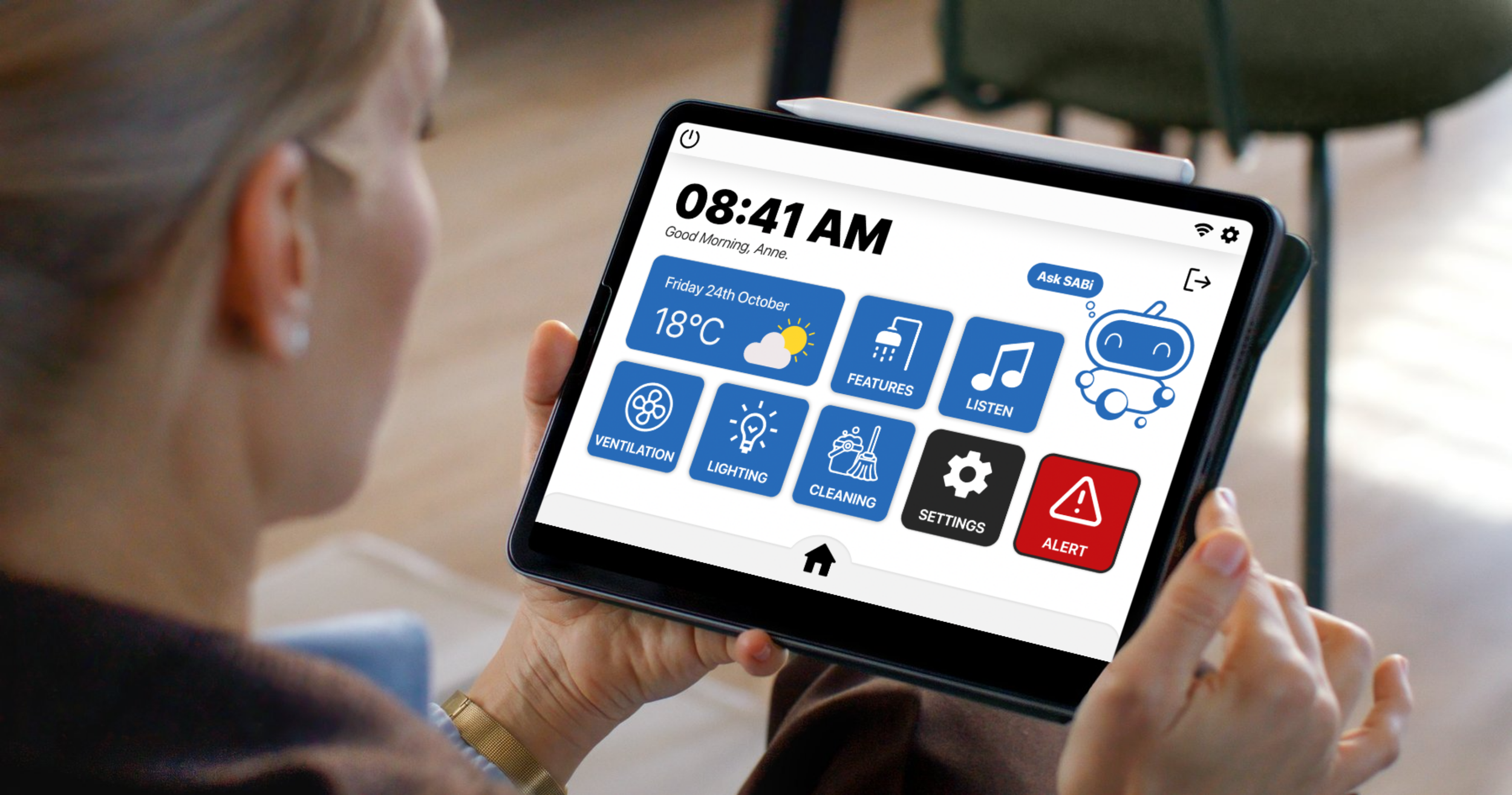
Simplicity and Usability: The interface prioritises clarity and consistency — intuitive icons, predictable layouts, and large touch targets ensure ease of navigation and confidence in use.
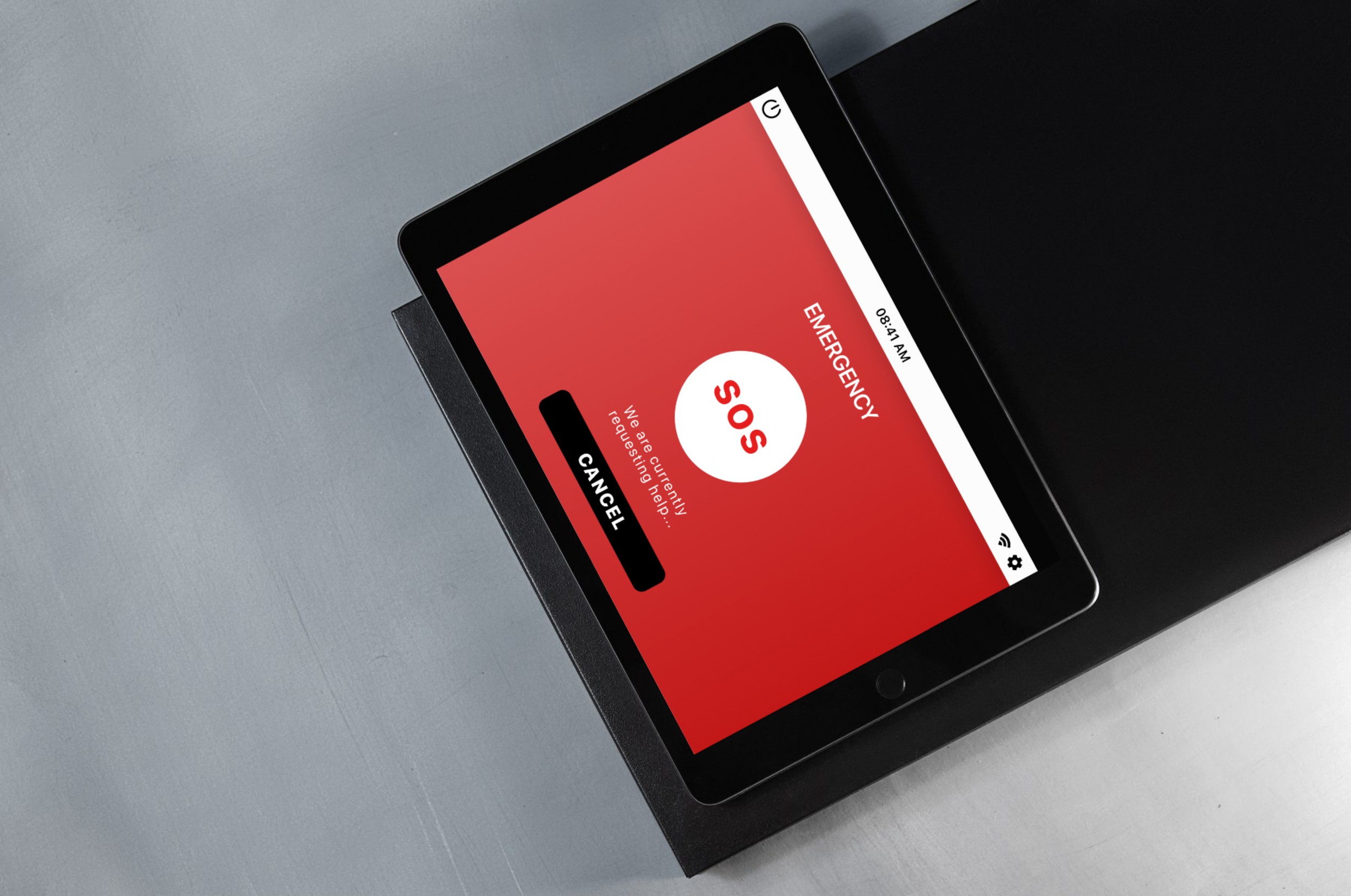
Safety and Support Systems: SABi includes an emergency button and automatic fall detection, providing quick access to help and reassurance through visual and audio feedback.

User Testing
Accessibility Validation: User testing confirmed that large buttons, clear text, and adjustable audio/visual settings improved navigation and confidence for users with sensory impairments.
Physical Design Feedback: Participants highlighted object height, material safety, and cost concerns, noting that hard surfaces increase injury risk and installation could be expensive.
Environmental Considerations: Feedback emphasised the need for effective ventilation and fans to reduce steam, ensuring safe and reliable touch-screen use.
User Scenarios and Personas
Based on insights from user research, we created three user personas and turned them into scenarios as well. All older adults with different stories but each with their own personal struggles or limitations just like what we heard from our primary and secondary research. One a 68 year old woman who’s goal are to live at home
UI Design
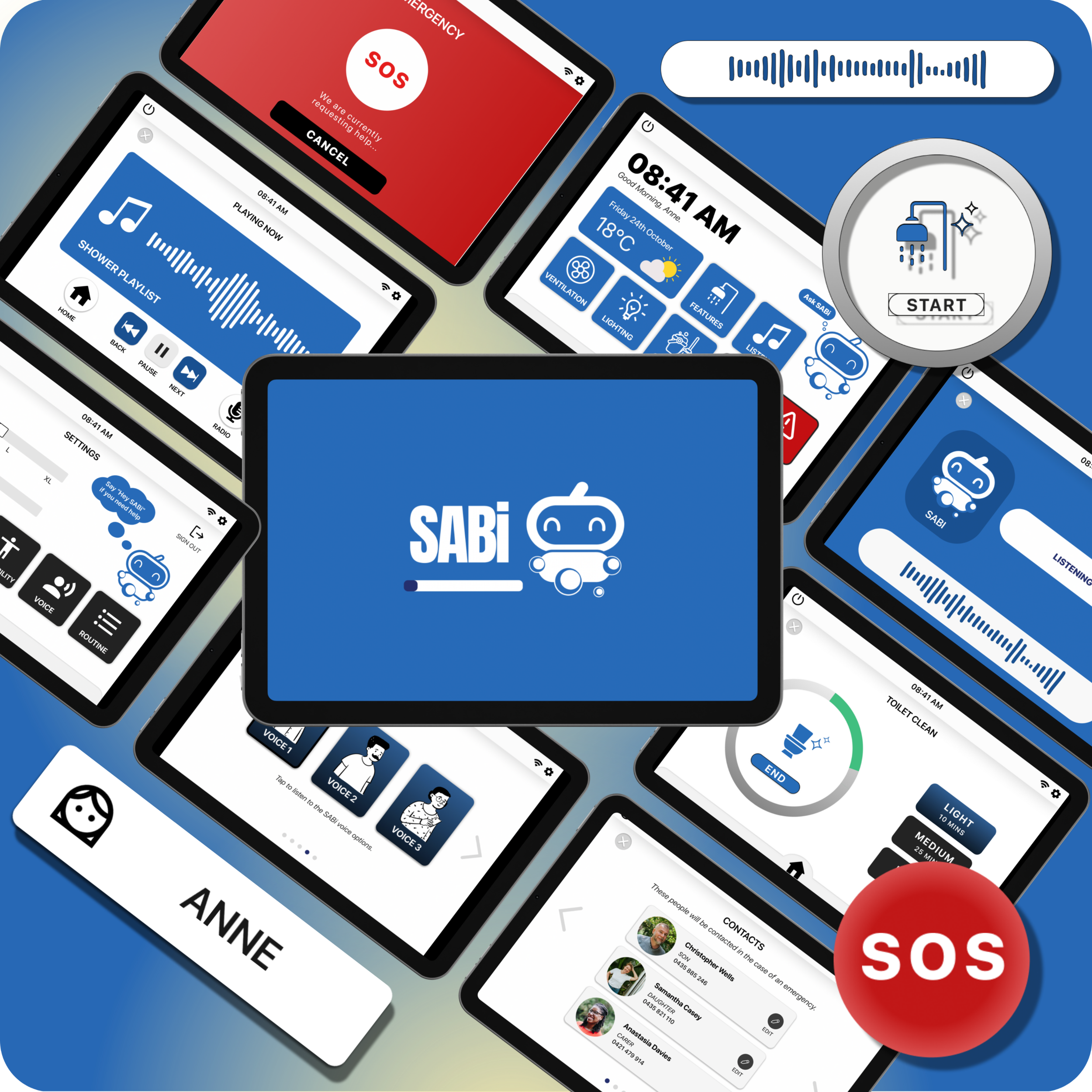
Construction of the identity of SABI System required accessibility at the forefront of stylistic choices.
From combined research the colour palette was to be bright and typefaces easy to read.
Buttons were required to be large and easy to press.
The mascot “SABI” was an addition central to the branding which aimed to make the interface fun, comforting and charming. This was created from user testing as many older adults apart of the testing initially found it hard to understand or connect with the interface as it just seemed overwhelming or unpleasant to learn, so we created SABi to break that hurdle.

Prototypes
There is three prototypes we have made for SABi,
The interface of SABi and it’s accompanying tablet
The floorplan/layout of how SABi will work and connect with everything else in the bathroom
A video showing how a user will move and interact with SABI
FloorPlan/Layout Prototype
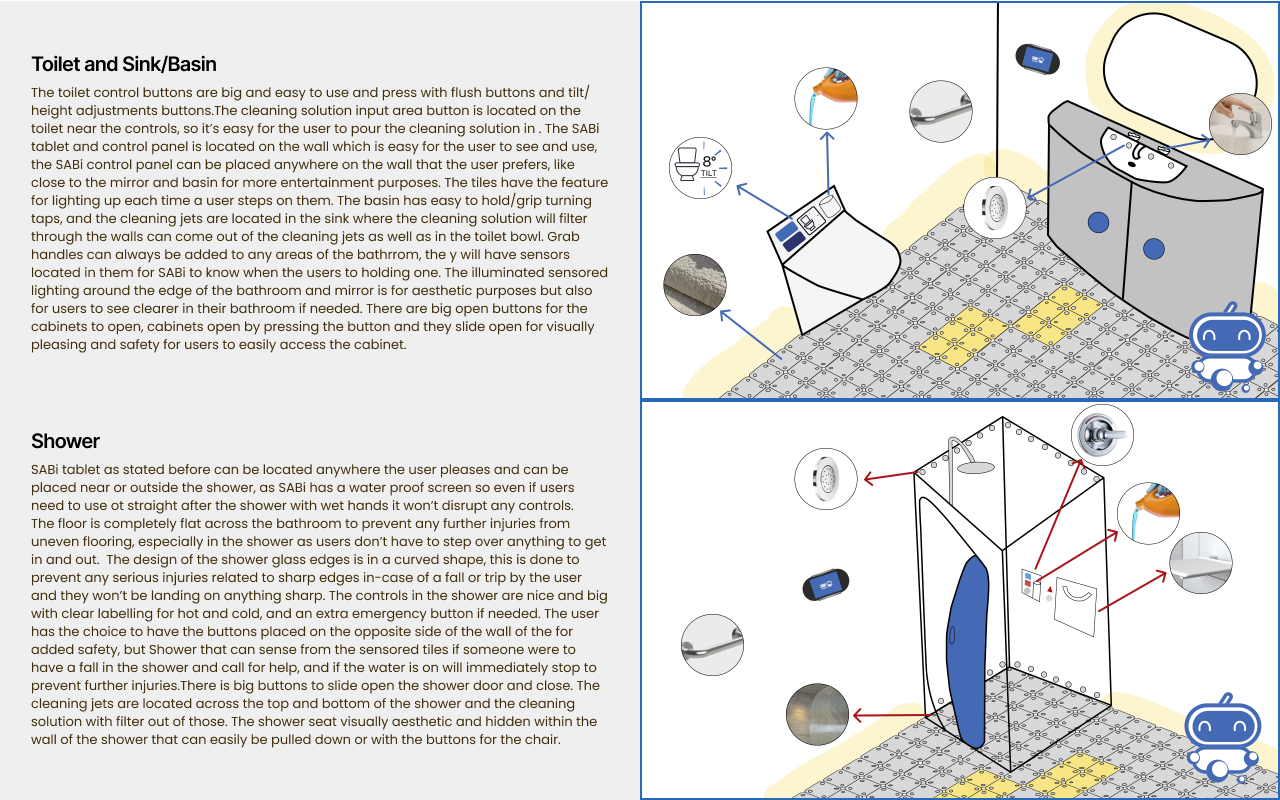
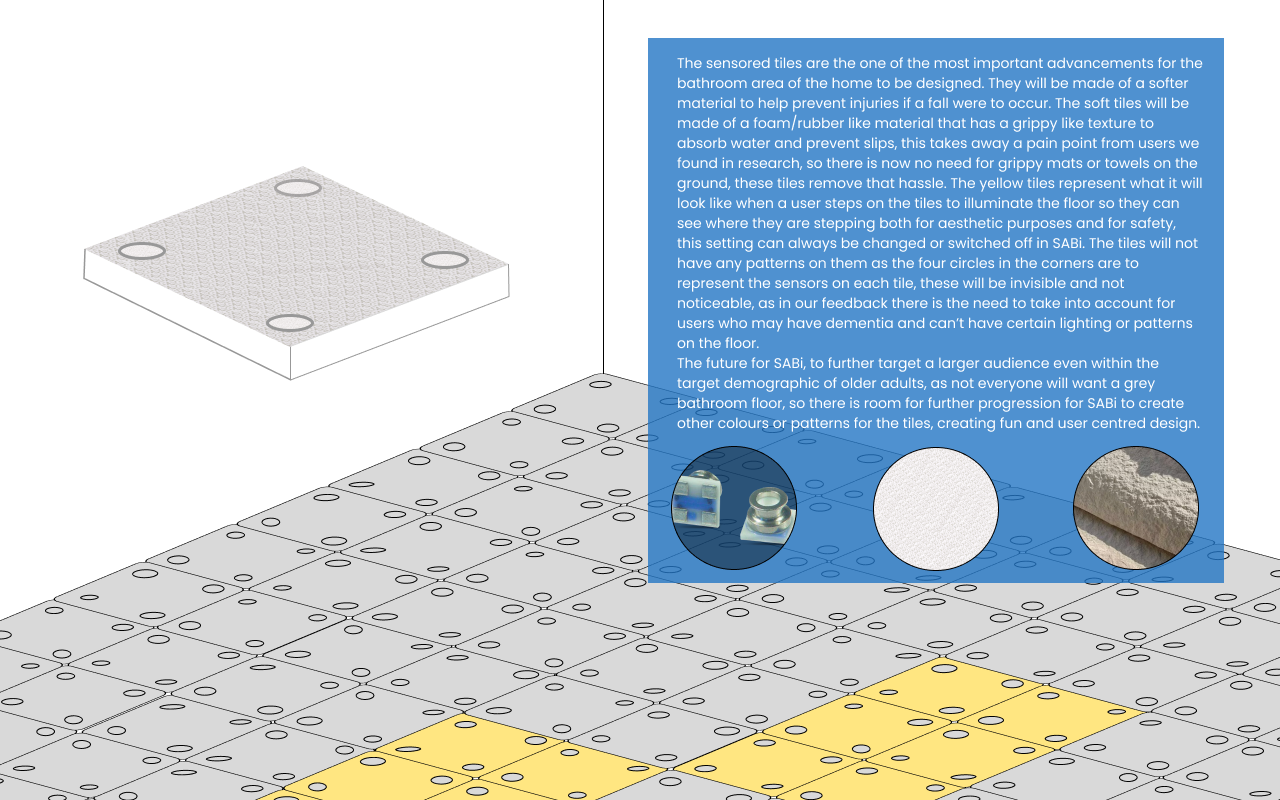
Drawings / Layouts designed and created by me
Anne and SABi - Video Prototype
To effectively communicate the way the target users will interact with SABI as an assistive technology, a scenario video was created. There was storyboarding and drafting ideas from all group members for the video to accurately portray our findings and ideas.
This video explores one of the created personas, Anne, as she completes a bed time routine using SABI to keep her safe and in control.
Interface Prototype